
-
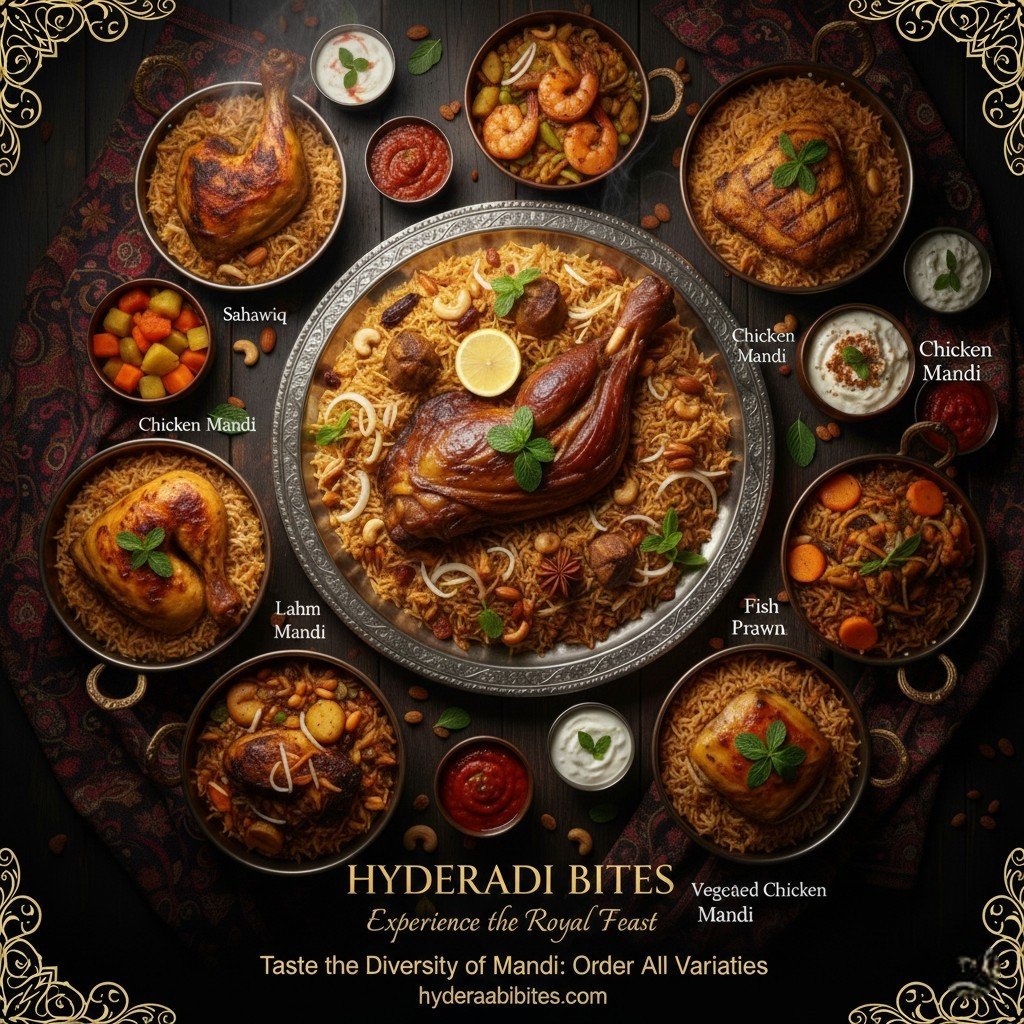
Hyderabadi mandi
Ita Yemeni-origin rice and meat dish that has become hugely popular in Hyderabad over the last decade, especially among college students and large groups looking to share a big platter. Unlike biryani, which is heavier on masala and layers of rice and gravy, mandi focuses on fragrant but relatively lighter long-grain rice cooked in a meat stock, topped with large pieces of roasted or grilled meat such as chicken or mutton. The word “mandi” comes from the Arabic root meaning “dew” or “moist,” referring to how tender and juicy the meat becomes after slow cooking in a closed environment.
-
Traditional Cooking:
Authentic Mandi is known for its “Underground” or “Handi” style cooking, where the meat is slow-cooked in a pit to achieve a smoky, tender texture.
-
Flavor Profile:
Unlike spicy Biryanis, Mandi focuses on the natural juices of the meat infusing the rice, often enhanced with aromatics like saffron and dry fruits.
-
Variety of Meats:
While traditional versions use whole Chicken, premium variations like Luxury Mutton Mandi feature large, succulent cuts of meat served over a massive platter of rice.
-
Modern Twists:
Contemporary versions, such as Modern Grilled Chicken Mandi, offer a fusion approach where the meat is grilled separately to add a charred flavor profile while keeping the rice traditional.
-
Essential Sides:
Every platter is incomplete without the signature sides, including spicy tomato chutney (Salata Hara) and creamy yogurt dips.
Hyderabadi mandi is an Arabian-style rice and meat dish that has become one of the most loved shared meals in Hyderabad, offering a milder, smoky alternative to the city’s iconic biryani. Originally from Yemen, mandi consists of long‑grain rice and tender meat such as chicken or mutton, cooked with a special spice blend and a unique tandoor or pit technique that gives it a distinct aroma and flavour. The meat is usually slow‑cooked in a spiced broth until it turns soft, and the same broth is then used to cook the rice, so every grain absorbs the essence of the meat and spices like cardamom, cinnamon, peppercorns, cumin, and saffron. In traditional style, the meat is later hung inside the tandoor above the rice, allowing the fat to drip down and flavour the rice while also getting a gentle smoky char on the meat.
In Hyderabad, mandi has evolved from a niche Barkas specialty into a full‑fledged trend, with dedicated mandi houses and even classic biryani restaurants adding it to their menus. Areas like Barkas, Bahadurpura, Jubilee Hills, Banjara Hills, and Gachibowli have become hotspots where large families and groups of friends gather around a single huge thaal or platter of mandi, sitting together and eating in a communal style that feels both festive and casual. Unlike the spicier, masala‑heavy Hyderabadi biryani, mandi in Hyderabad is generally mild, aromatic, and less oily, which appeals to people who want flavour without too much heat. It is usually served with a simple but punchy tomato‑green chilli salsa or salata, raita, and sometimes a clear meat soup, which add freshness and tang to each bite.
The varieties of Hyderabadi mandi keep expanding: you will find classic chicken and mutton mandi, Al Faham (grilled) mandi, fry mandi, zurbiyan mandi, and even seafood options, all tweaked slightly to suit local taste buds while keeping the core Arabian character intact. For many Hyderabadis, mandi has also entered wedding menus and special occasions alongside biryani, showing how deeply it has integrated into the city’s food culture in just a few years. With its combination of fragrant rice, melt‑in‑the‑mouth meat, and the joy of sharing one big platter, Hyderabadi mandi today represents a fusion of Arab tradition and Hyderabadi hospitality on a single plate.